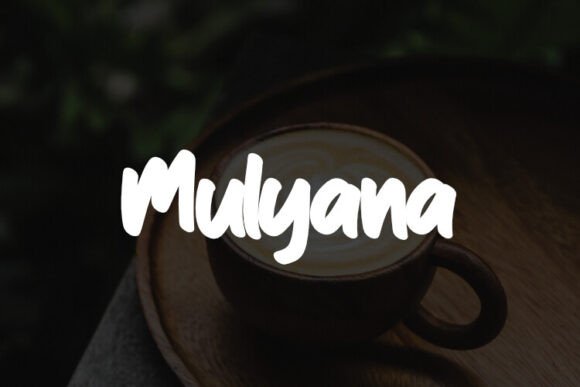
Mulyana Font: A Web Designer’s Review
I was recently working on a landing page for a boutique coaching brand that needed to feel approachable yet polished. The client wanted to move away from the sterile, corporate aesthetic common in the industry and inject some warmth into their digital presence. I pulled up my font library and selected Mulyana, a versatile script typeface from Script Amp, to test in the hero section. The moment I applied it to the headline, the entire mood of the layout shifted. It wasn’t just about aesthetics; it was about creating an immediate emotional connection with the visitor. This review explores how Mulyana performs in real-world web design scenarios, from responsive layouts to brand identity integration.
Visual Personality and Digital Appeal
Mulyana is a modern typography asset that strikes a delicate balance between elegance and readability. As a script font, it carries the fluidity of handwritten calligraphy but maintains the structural integrity required for digital screens. Its strokes are smooth and consistent, avoiding the erratic quirks that can make some handwritten fonts difficult to parse on mobile devices. The font exudes a sense of grace and adaptability, making it an excellent choice for brands that want to appear human-centric and creative.
When testing Mulyana against various background colors, I found it particularly effective on both light and dark modes. On a clean white background, it feels airy and sophisticated. When placed over a muted photographic banner, it retains its legibility without needing excessive drop shadows or heavy outlines, which often clutter modern web design. This versatility makes it a valuable addition to any web designer’s toolkit, especially for projects requiring a premium feel without sacrificing user experience.
Strategic Use in Web Layouts
The key to using a display font like Mulyana effectively is understanding its hierarchy. It is not designed for body copy. During my tests, I restricted its use to hero headlines, section titles, and short call-to-action phrases. In a recent portfolio site redesign, I used Mulyana for the main introduction header while pairing it with a clean sans serif font for the paragraph text. This contrast created a clear visual path for the eye, allowing users to scan the page efficiently while still enjoying the decorative flair of the title.
- Hero Sections: Mulyana shines in large sizes, where its ligatures and swashes can be fully appreciated. It works beautifully for welcoming messages or primary value propositions.
- Testimonials and Quotes: Using this font for pull quotes adds a layer of editorial design sophistication, breaking up dense text blocks and adding visual interest.
- Digital Ads and Social Graphics: For campaign landing pages or social media graphics linked from ads, Mulyana helps create instant brand recognition due to its distinctive character shapes.
However, caution is necessary when using it for navigation menus or small buttons. While it is readable at medium sizes, the intricate details of the script can blur or merge on smaller screens if the font size is too reduced. I recommend keeping Mulyana above 24px for optimal clarity on mobile devices, ensuring that the user experience remains seamless across all breakpoints.
Readability and Responsive Considerations
In today’s multi-device world, a font must perform well on everything from a 27-inch monitor to a 5-inch smartphone screen. Mulyana handles responsive scaling surprisingly well, provided you adjust line height and letter spacing appropriately. Unlike some rigid serif fonts, the organic flow of Mulyana allows it to breathe even when wrapped onto multiple lines. However, I noticed that certain character combinations can overlap if the tracking is too tight. Adjusting the letter-spacing slightly positive can prevent these collisions and improve overall legibility.
For accessibility, it is crucial to maintain high contrast between the text and the background. While Mulyana is elegant, it should never compromise readability for style. I tested it on several low-contrast backgrounds and found that it struggled slightly with very subtle color differences. Ensuring a strong contrast ratio is essential for meeting web accessibility standards and ensuring that all users, including those with visual impairments, can engage with your content.
Font Pairing for Brand Identity
A strong brand identity relies on cohesive typography. Mulyana pairs exceptionally well with neutral, geometric sans serif fonts. The simplicity of a sans serif provides a stable foundation that allows the script to stand out without competing for attention. For a more traditional or editorial look, pairing it with a classic serif font can create a rich, textured aesthetic suitable for luxury goods or literary blogs.
When building a design system, consider using Mulyana for H1 and H2 tags, while reserving a highly legible sans serif for H3 through H6 and body text. This hierarchy ensures that the decorative nature of the script font enhances the design rather than overwhelming it. Avoid pairing it with other script fonts, as this can create visual chaos and reduce the professional appearance of the website.
Licensing and Technical Implementation
Before implementing Mulyana on a client’s website, it is vital to check the licensing terms. Script Amp typically offers various license options, including desktop and webfont licenses. Ensure you have the appropriate commercial font license for web use, especially if the site generates revenue or promotes products. Using a font without the proper web license can lead to legal issues and inconsistent rendering across different browsers.
Technically, loading webfonts can impact page speed. To mitigate this, I recommend preloading the Mulyana font file or using a font-display swap strategy to ensure that text remains visible while the custom font loads. This approach prevents the "flash of invisible text" and maintains a smooth user experience. Additionally, check for multilingual support if your audience is global, ensuring that the font includes the necessary character sets for your target regions.
In conclusion, Mulyana is a powerful tool for web designers looking to add warmth and personality to digital interfaces. Its adaptability makes it suitable for a wide range of projects, from online stores to personal portfolios. By respecting its limitations regarding size and pairing, you can leverage its beauty to create engaging, memorable web experiences that resonate with users on an emotional level.